The Tuesday Update: A Loan Officer's SOP for Keeping Agents Informed
By Debbie Cuha, November 13, 2026. 6 min read

The simplest way for a loan officer to keep agents informed is a written status update on every active file, sent the same day every week, whether or not anything changed. Six lines, by noon on Tuesday. Agents do not stop referring because of one hard file. They stop because they had to chase you to find out about it.
Key takeaways
- Send a written status update on every active file every Tuesday by noon.
- Send it even when nothing has changed, and say what you are waiting on.
- Six lines, with one of three statuses: on track, watch or at risk.
- Bad news goes by phone first, the same day, before the email.
- The buyer's agent gets all six lines. The listing agent gets status and dates only.
At DirectLender.com we closed more than 1,000 loans a month. At that volume, communication cannot depend on who remembers to call. It has to be a procedure.
Why does a weekly update matter so much?
Because the agent is the one being asked. An agent with a buyer in escrow hears "how is the loan going?" from the client, the other agent and often the seller. If they do not know, they look bad.
If they have to call you three times to find out, they remember that the next time a buyer asks who to use. The show notes for a Tom Ferry podcast episode with agent Marty Rodriguez and mortgage broker Norma Morales, the strategic partnership that can increase your real estate business, list communication as the key to the agent and lender relationship.
Why a fixed day instead of milestone updates?
Because the calls come between milestones. Most lenders update agents when something happens: appraisal in, conditions out, clear to close. The gap between those events is when an agent starts to wonder.
A fixed day closes the gap, and it gives the agent something to tell the client: "I hear from the lender every Tuesday."
Keep the milestone messages your system sends. They are an addition. They do not replace the update, because a system cannot write "what I need from you."
Why Tuesday?
Tuesday leaves Monday for the processor to bring every file current and leaves three business days to fix a problem before a Friday closing. Any day works if it never moves. Pick one and protect it.
What is the SOP?
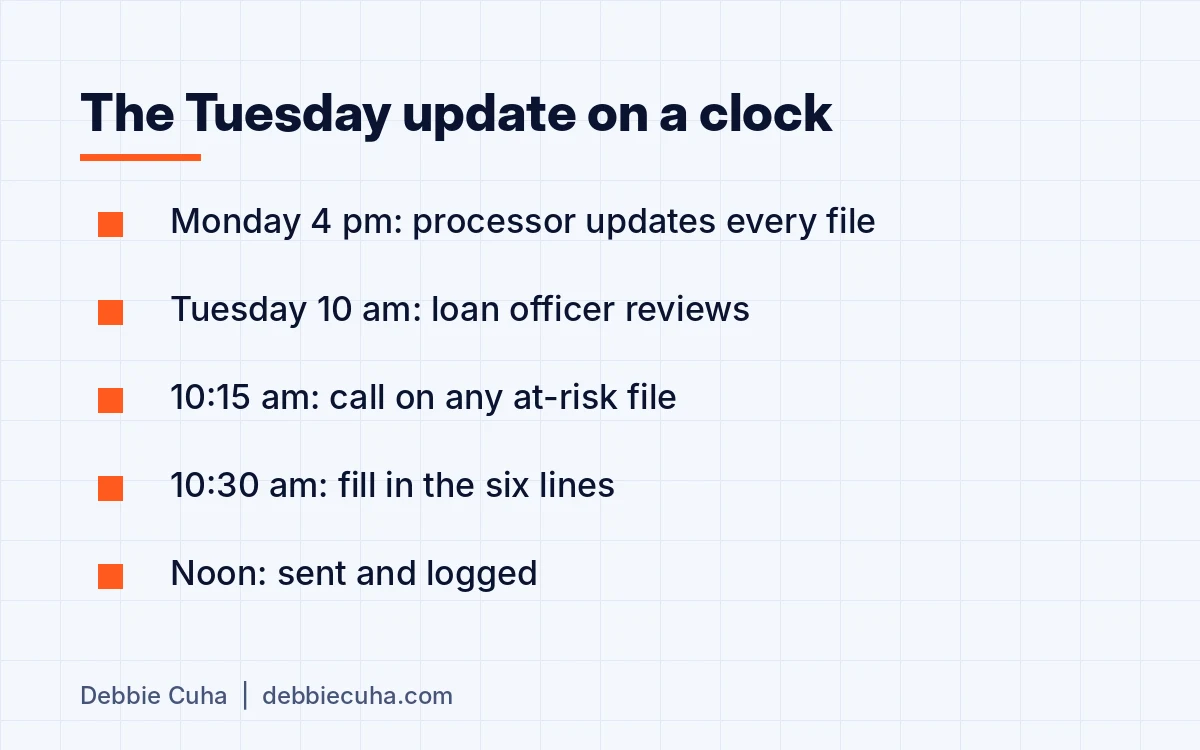
A trigger, an owner, a standard and six steps on a clock.
- Trigger: Tuesday, 10 am, every week.
- Owner: the loan officer. An assistant or processor can prepare it. The loan officer sends it.
- Standard: every active file, by noon. No exceptions for "nothing new."
| When | Who | Step |
|---|---|---|
| Monday 4 pm | Processor | Update status and outstanding conditions on every file |
| Tuesday 10 am | Loan officer | Review each file and set the status |
| Tuesday 10:15 am | Loan officer | Call the agent on any file marked at risk |
| Tuesday 10:30 am | Loan officer or assistant | Fill in the six lines for each file |
| Tuesday by noon | Loan officer | Send. Copy the processor. |
| Tuesday by noon | Assistant or processor | Log "update sent" in the file notes |
Monday's step relies on a clean loan officer to processor handoff.
What goes in the update?
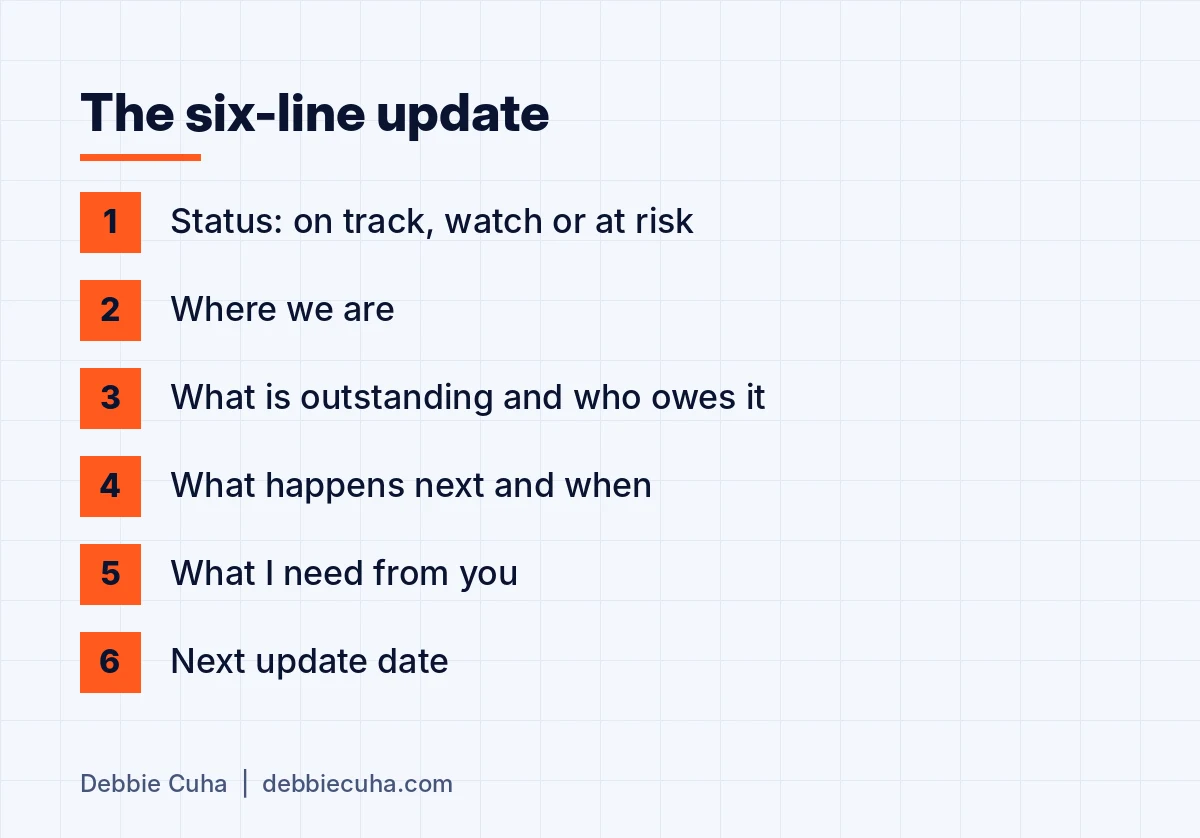
Six lines an agent can read in the car. Copy this.
Subject: Loan update, [property address], closing [date]

Status: on track / watch / at risk
Where we are: [appraisal ordered, in underwriting, conditions out, clear to close]
Outstanding: [item], owed by [who], due [date]
Next: [what happens next] by [date]
From you: [what I need, or "nothing this week"]
Next update: next Tuesday, or sooner if anything changes
What do on track, watch and at risk mean?
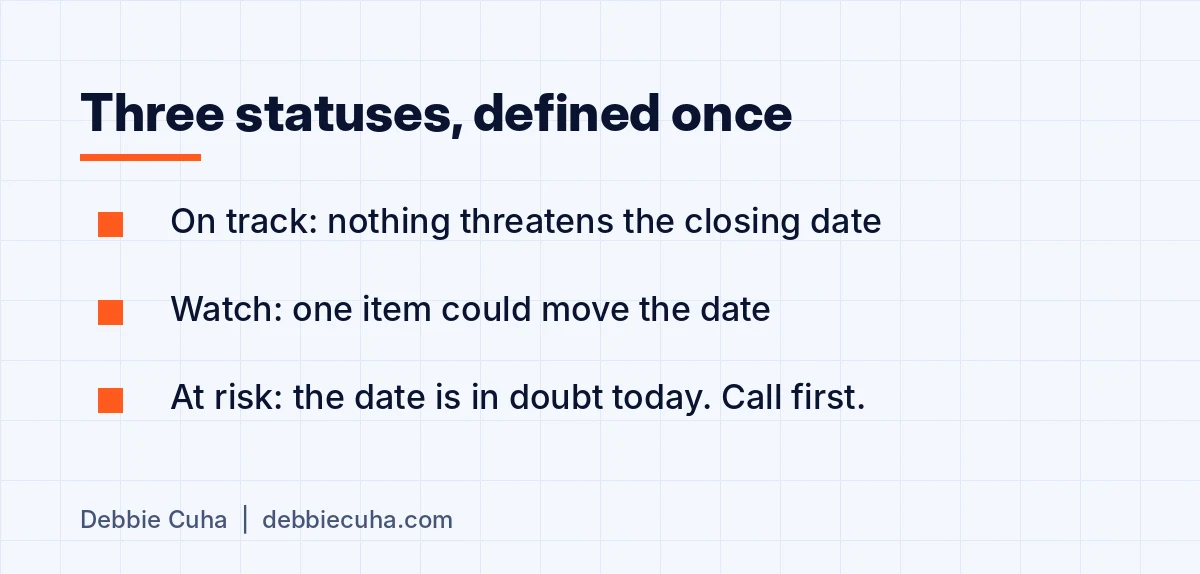
Define the three words once, in writing, so every agent reads them the same way.
| Status | Meaning | What the agent should do |
|---|---|---|
| On track | Nothing threatens the closing date | Nothing |
| Watch | One item could move the date if it is not in by its due date | Help chase the item named |
| At risk | The closing date is in doubt today | Expect a call before this email |
What does a finished update look like?
Here is one filled in. The file and the names are made up.
Subject: Loan update, 123 Example Street, closing December 4

Status: watch
Where we are: in underwriting, appraisal received
Outstanding: updated bank statement, owed by the buyer, due Thursday
Next: conditions back to underwriting by Friday
From you: a nudge to the buyer about the statement
Next update: next Tuesday, or sooner if anything changes
What do you send when nothing has changed?
The same six lines. "No change since last Tuesday" goes on the second line, and the outstanding line still names what you are waiting on, who owes it and when it is due. Silence reads as trouble. A short update reads as control.
Do both agents get the same update?
No. The buyer's agent gets all six lines. The listing agent gets the status, where the file is and the dates. Neither one gets income, credit, assets or the reason behind a condition.
A loan file holds private financial information, and federal privacy rules limit what a lender shares outside the company. The Consumer Financial Protection Bureau's Regulation P, section 1016.15 covers disclosures made with the consent or at the direction of the consumer. I am not giving legal advice. Ask your compliance officer what your company allows, get the borrower's written permission at application, and write the answer into the SOP.
What is the rule for bad news?
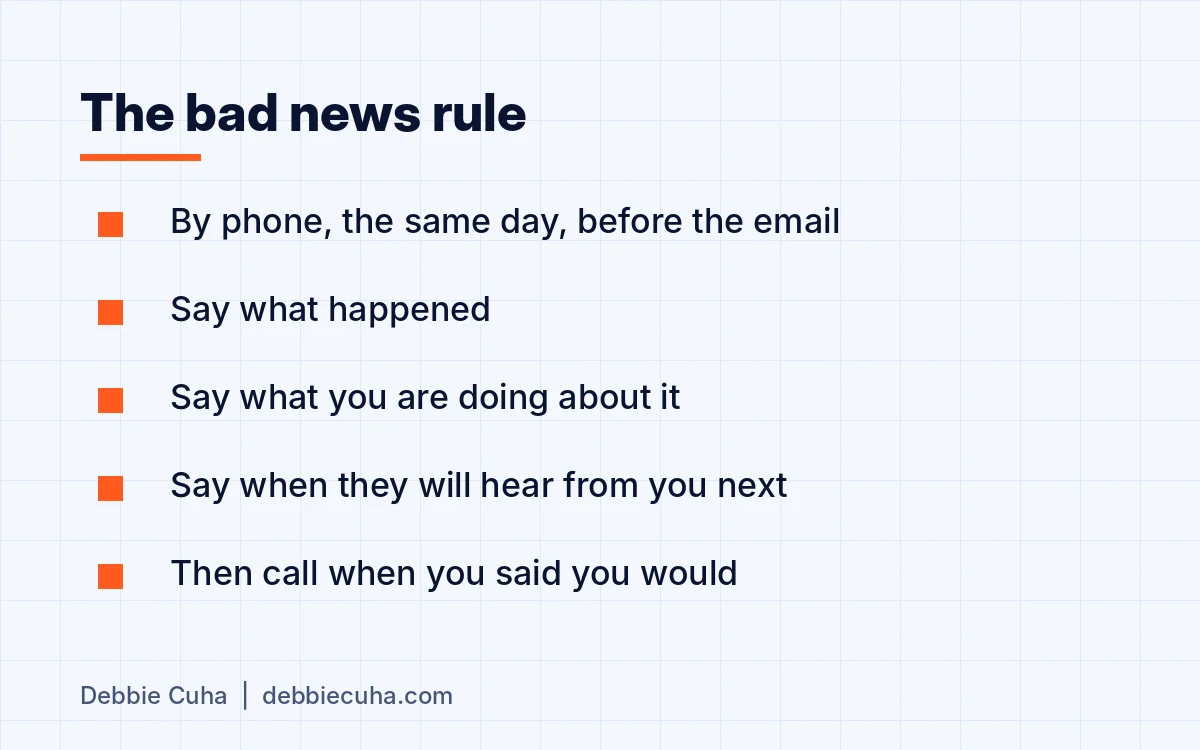
Bad news travels by phone, the same day, before the update. Never let an agent learn about a problem from a line in an email, and never let them learn it from the client.
Say three things: what happened, what you are doing about it, and when they will hear from you next. Then call when you said you would.
What do you track?
Three numbers: updates sent against active files, late surprises and repeat referrals.
- Updates sent against active files, every week. The target is all of them.
- Files that went from on track to at risk with less than seven days to closing.
- Agents who sent a second file within 90 days.
Review the first number in your weekly numbers meeting. The conditions side of the same discipline is in mortgage processing SOPs.
Does this work for a solo loan officer?
Yes, and it matters more, because you have no one to catch what you forget. Block Tuesday 10 to noon. Update the files yourself on Monday afternoon. Use the template. It is the cheapest marketing a loan officer will ever do.
If you are an agent reading this, hand it to your lender. The agent side of the same habit is the weekly seller update in the listing launch SOP, and the rest of what a team should have in writing is in the SOPs every real estate team needs.
Next steps
- Get the free 12-SOP kit and put your name on the first five.
- See how SOP consulting works if you want these built for your team.
- Or email me a question at dc@syngp.com. I read every one.