How to Overcome a Limiting Belief: What 120 km Across the Sahara Taught Me
By Debbie Cuha, November 14, 2026. 5 min read
A limiting belief is a conclusion you reached once and never audited again. You overcome it the same way you fix any broken number in a business: you find the evidence, you break the job into stages, you set checkpoints, and you move to the next one. I tested that in October on the MDS Trek Morocco, 120 km across the Sahara in four stages over five days of walking.
I am an operator. I co-founded DirectLender.com and wrote the SOPs that ran 280 offices and about 3,000 people. So when I signed up to cross a desert on foot, I did the only thing I know how to do with something that looks impossible. I treated it like an operations problem.
What is a limiting belief, really?
A limiting belief is a rule you follow that nobody ever wrote down and nobody ever checked. "I'm not a numbers person." "My team won't follow a system." "I'm too far behind to start." It feels like a fact because you have repeated it for years.
In my world, an unaudited number is the most dangerous thing in the building. It sits in a report, everyone plans around it, and nobody remembers where it came from. A belief works the same way. The problem is not that it is negative. The problem is that it has never been tested.
Tom Ferry has a podcast episode on exactly this, where he talks about how limiting beliefs hold people back from doing something extraordinary with their business. You can listen to it on tomferry.com. I agree with him, and I would add one operator's note: you do not argue with a belief. You audit it.
How do you audit a belief?
Use the same four steps I would use on a broken process.
- Write the belief down as one sentence. Not a feeling. A sentence you could read out loud. Mine was: "Wow, 120 km through the Sahara. That's intimidating." Under it sat the real one: I can't do that.
- Ask for the evidence. Where did this number come from? When I looked, the evidence ran the other way. I have done long treks before. In October and November of 2009 I trekked to Everest Base Camp from Lukla, and that was more than 120 km. Different ground, no sand, but longer. The belief had no data behind it and my own history against it.
- Break the job into stages. Nobody walks 120 km. You walk one stage at a time. A stage is a string of checkpoints. A checkpoint is a number of steps you already know you can take.
- Set the standard for today only. The standard is never "finish the desert." The standard is "reach the next checkpoint, drink, eat, check your feet, go again."
That is not a mindset trick. It is an SOP. A trigger, an owner, a standard and a checklist. The same four things I tell every team to write before they complain that their people are not performing.
What happened when it got hard?
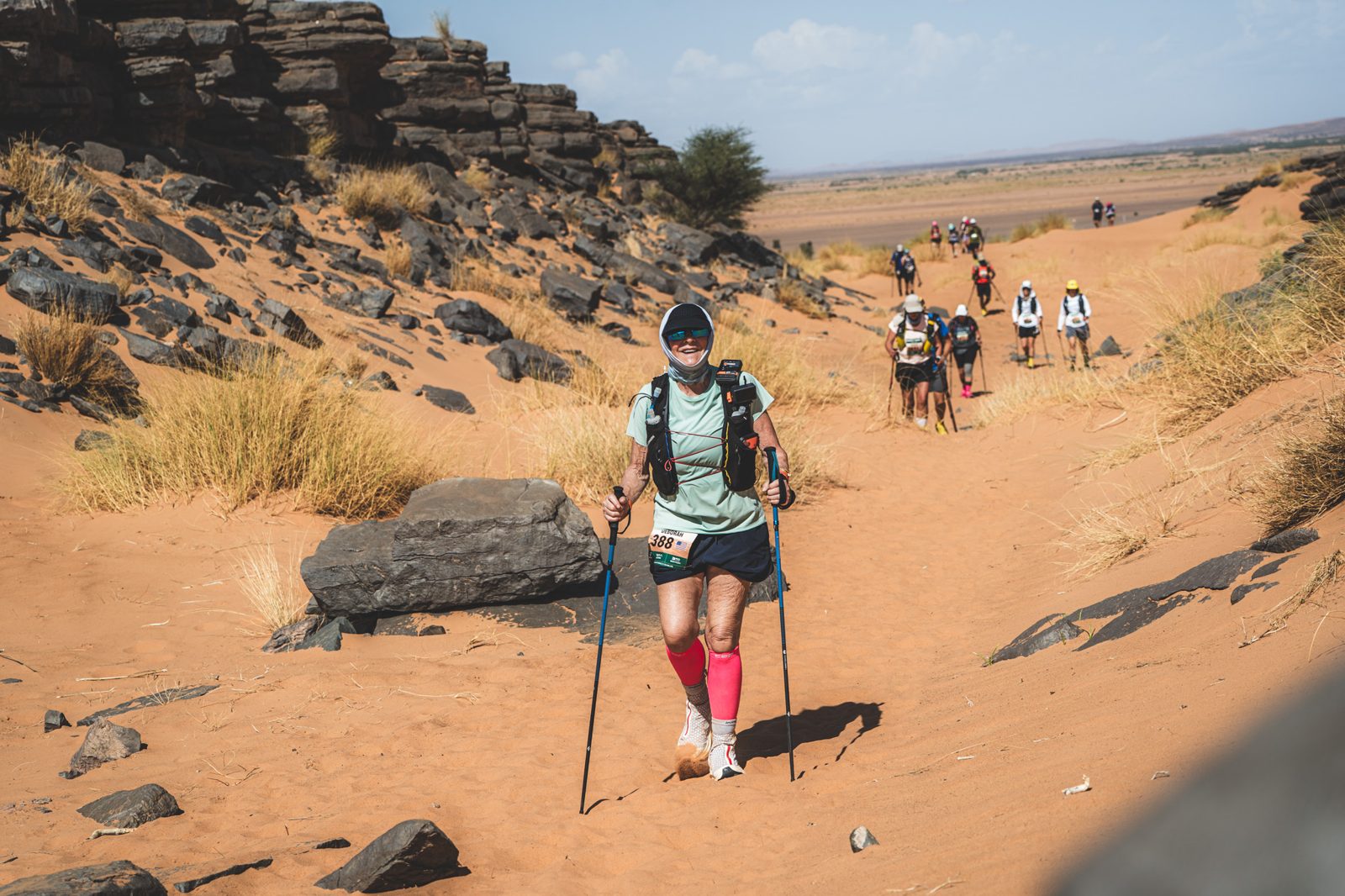
Stage three is the one that got me. The organizers call it one stage, but it is two days: 31 km out, a night sleeping in the desert under the stars, then 26 km back.
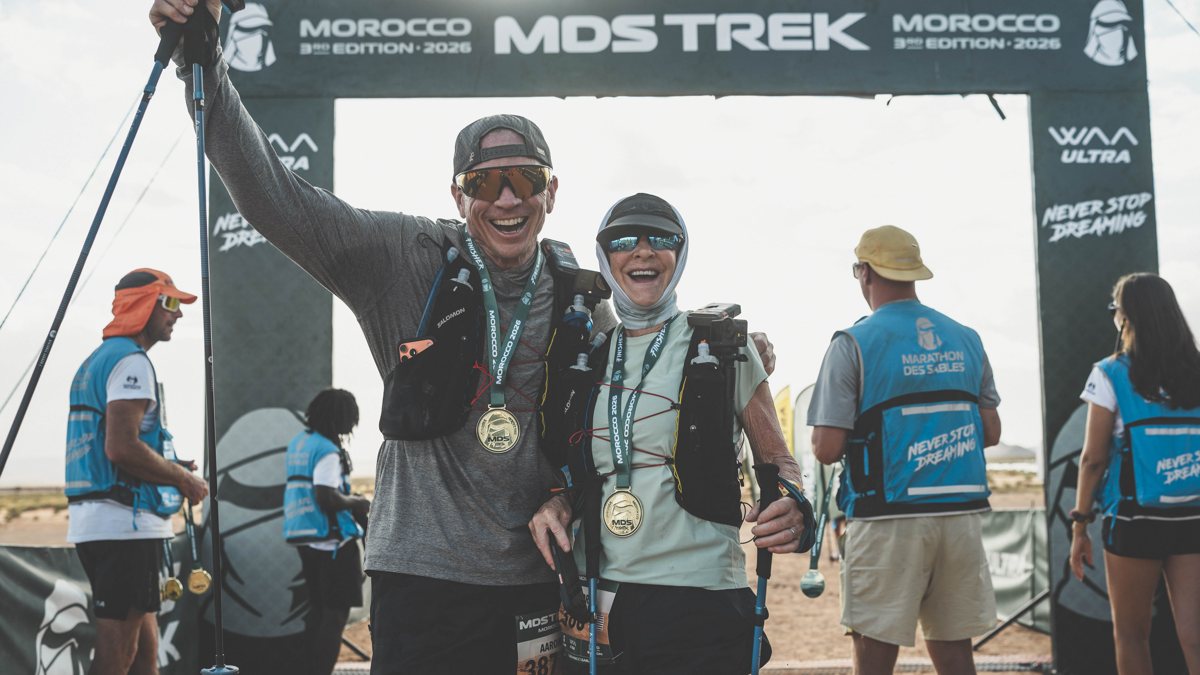
At the end of the first part I had a little breakdown at the finish line. Aaron was there waiting for me. I was crying and overwhelmed. I had the evidence, I had the checklist, and I still fell apart for a few minutes.
I want to be honest about that, because people talk about beliefs as if you beat them once and they stay beaten. They do not. The audit does not stop the bad moment. It tells you what to do after it. I got through it and I slept under the stars. The next day I walked the 26 km back and I felt strong. Resilience had appeared. My body was still fighting the experience, so it was mind over body, but there were only two stages left and there was no world in which I was not going to finish.

The plan also changed on us. The final stage was moved up a day because storms were coming. Nobody asked whether we were ready. Confidence does not carry you through a change of plan. Structure does. When the day moved, the checklist did not. Next checkpoint. Water. Food. Feet. Go again.
And on three of the five days Aaron ran ahead, so I was not walking beside my husband of thirty-five years. I walked with people I met in the desert that week, and I finished every one of those days.
What does this have to do with your business?
Everything. Over those five days I took roughly 200,000 steps. Not one of them was impressive. All of them were the next one.
Most teams I see are not short on talent or motivation. They are carrying three or four unaudited sentences. "Our agents won't do follow-up." "We're too small for systems." "I'm the only one who can do this right." Each one feels like a fact and each one is running the company.
So do the audit this week:
- Write the sentence down.
- Ask where the evidence is, and look at the actual numbers.
- Break the job into stages and name the first checkpoint.
- Set today's standard, and only today's.
Aaron likes to say you choose your hard. Building the system is hard. Living without one is harder, and it lasts longer.
Where do you start?
Start with one process and one page. If you want the format I use, read how to write an SOP your newest agent can follow, or go to the full guide on real estate SOPs. If your team already has SOPs and ignores them, this is usually why.
We did the trek to raise money for the Center for Global Change and our families in Nepal. I went out there to finish 120 km. I came home with one less sentence I believe about myself.

If you want help finding the sentences that are running your team, get in touch: dc@syngp.com.