The Buyer Consultation SOP: The Meeting Before the First Showing
By Debbie Cuha, October 29, 2026. 7 min read
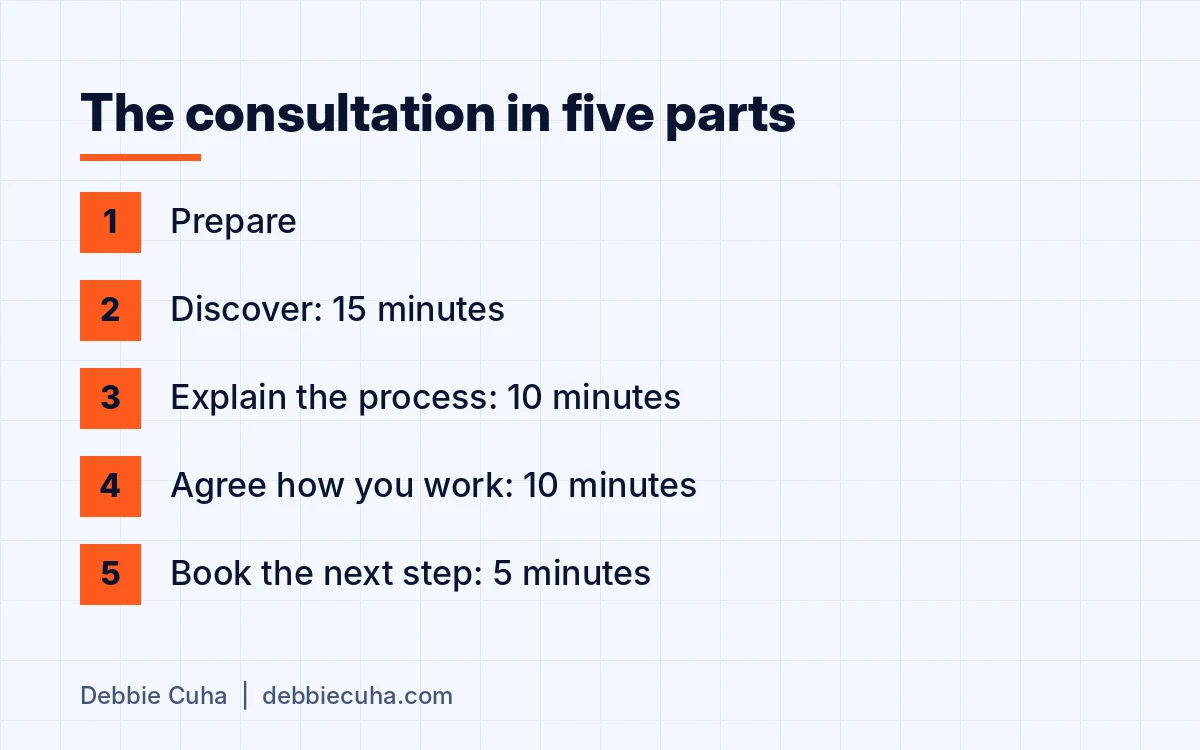
A buyer consultation is a 45-minute meeting that happens before the first showing, and it has five parts: prepare, discover, explain the process, agree on how you will work together, and book the next step. Run it the same way every time and you know by the end of the meeting whether there is a client in the room.
Key takeaways
- Hold a 45-minute buyer consultation before the first showing.
- Confirm lender status before the meeting.
- Ask and write down the answers before you explain anything.
- Explain the agreement and how you are paid in plain words, then sign before you tour.
- Never end the meeting without a dated next step.
I come at this from the lending side. I co-founded DirectLender.com and was its CFO when it closed more than 1,000 loans a month. My position: a buyer with no pre-approval is not ready for a showing. They are ready for a lender.
What happens in a buyer consultation?
Five parts in 45 minutes, and each part ends with something in writing.
| Part | Minutes | What exists at the end |
|---|---|---|
| Prepare | Before the meeting | Questionnaire returned, lender status known |
| Open | 5 | Agreement on what the meeting covers |
| 1. Discover | 15 | Their answers, written down |
| 2. Explain the process | 10 | A one-page map they take home |
| 3. Agree how you work | 10 | A signed buyer agreement |
| 4. Book the next step | 5 | A date in both calendars |
The opening line: "Before we look at a single house, I want to make sure we are aligned on what you want and how I work. Fair?"
Tom Ferry's buyer consultation checklist puts the meeting at 30 to 60 minutes. Mine is fixed at 45 so the agent and the calendar both know what to expect.
What do you do before the meeting?
Four things, finished the day before, so the 45 minutes are spent on the buyer and not on finding paperwork.
- Confirm by text the day before with time, place and what to bring.
- Send a short questionnaire: timeline, price range, lender status, must-haves.
- Check lender status.
- Print or load: sample purchase contract, your buyer agreement, a one-page process map.
What if the buyer is not pre-approved?
Hold the consultation anyway, and make a lender the next step instead of a showing. Offer several lenders and let the buyer choose. Do not recommend only one. Book the lender call before they leave, and set the first showing block for after the pre-approval arrives.
The lending side of that handoff is in the loan officer to processor SOP.
What do you ask in discovery?
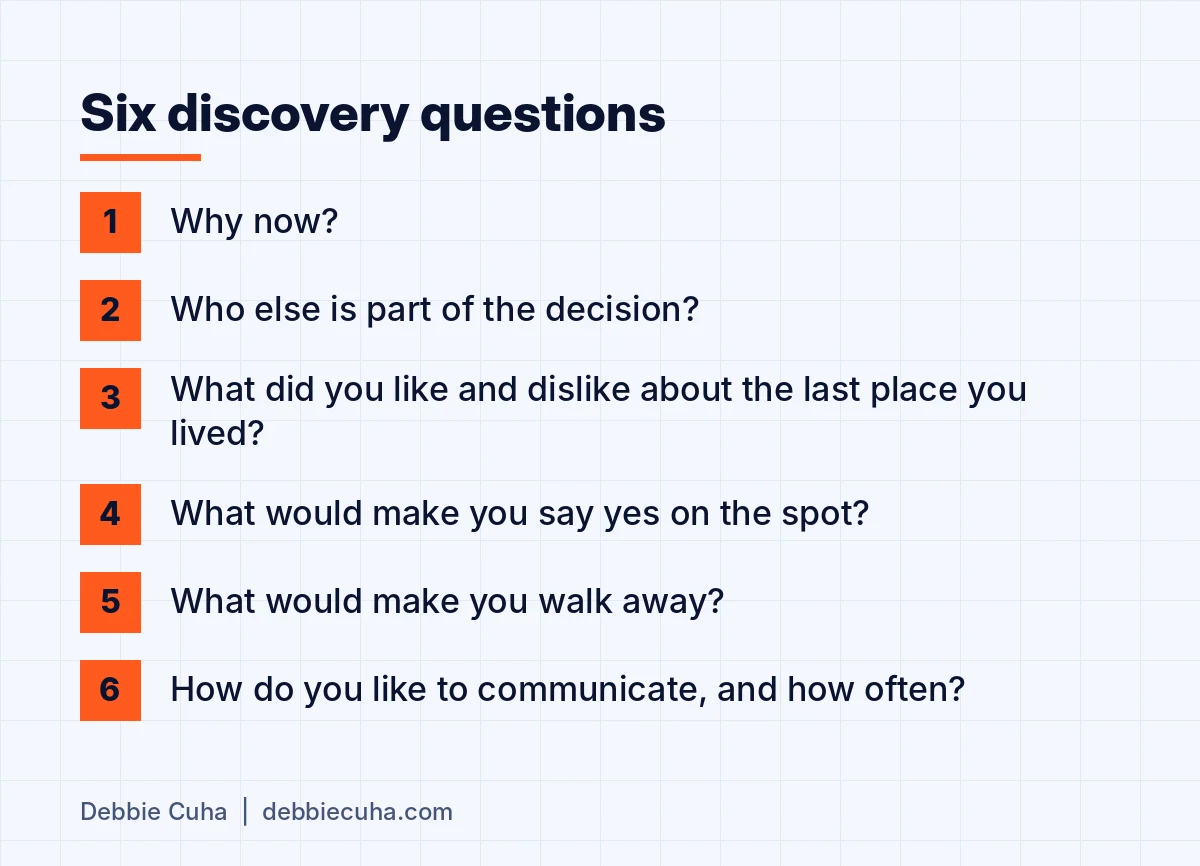
Six questions, asked before you explain anything, with the answers written down in front of them.
- Why now? What happens if you do not move this year?
- Who else is part of the decision?
- What did you like and dislike about the last place you lived?
- What would make you say yes on the spot?
- What would make you walk away?
- How do you like to communicate, and how often?
What can you not say in a buyer consultation?
Anything that steers. Show homes based on the criteria the buyer gives you: price, size, features and the locations they name. Never describe a neighborhood by who lives there. For questions about schools, crime or demographics, point them to public sources and let them decide.
That is fair housing, and it belongs in the written SOP, not only in a yearly training.
How do you explain the process?
Walk the one-page process map from search to keys in ten minutes. Name the three points where deals usually wobble: inspection, appraisal and loan conditions. Buyers who were warned do not panic.
How do you explain the buyer agreement and how you are paid?
In plain words, term by term, before anyone picks up a pen: what you will do, how long the agreement runs and what you are paid. Say the amount out loud. Say that it is negotiable.
"This agreement spells out what I will do for you, how long we are working together, and how I am paid. The amount is negotiable, and it is in writing so there are no surprises later. What questions do you have?"
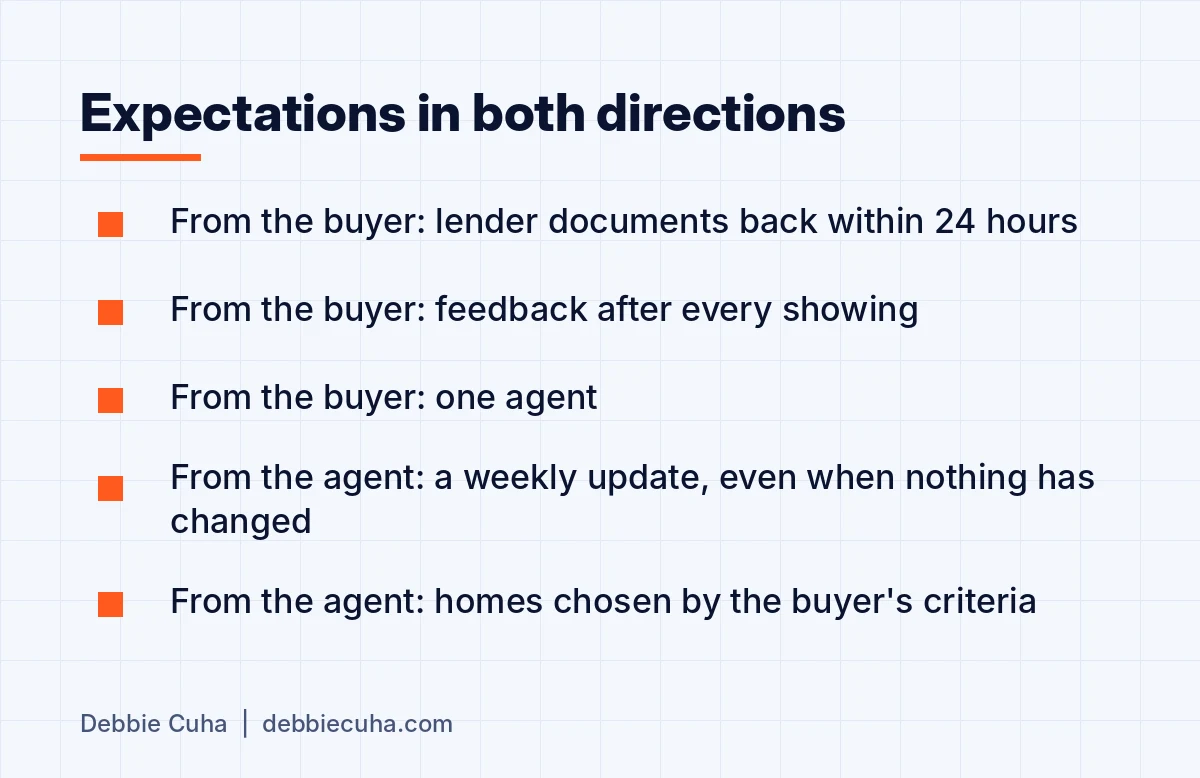
Then put the expectations on the table in both directions.
| What I expect from you | What you can expect from me |
|---|---|
| Lender documents returned within 24 hours | A weekly update, even when nothing has changed |
| Feedback after every showing | Homes chosen by your criteria, not mine |
| One agent | Every deadline explained before it arrives |
Do you need a signed agreement before the first showing?
In most cases, yes. Under National Association of REALTORS practice changes effective August 17, 2024, an MLS participant working with a buyer needs a written agreement before touring a home, in person or by live video.
NAR's Written Buyer Agreements 101, published May 31, 2024, says the agreement must state the amount or rate of compensation, that the amount cannot be open-ended, and that commissions are fully negotiable.
State law and your broker's forms win over anything on this page. Have your managing broker review your consultation before you run it.
What if the buyer will not sign?
Then you do not tour, and you say so kindly. Ask which term is unclear and answer it. Offer to pick it up tomorrow.
Do not start showing homes on a promise to sign later. Touring before the consultation and the agreement is the failure this SOP exists to prevent.
Where should you hold it?
Anywhere private enough to talk about money, with room to put paper on a table: your office, their kitchen table or a video call. Published advice splits on coffee shops. My test is whether the buyer would say their income out loud in that room.
How do you end the meeting?
With a date. Never end without one.
- First showing block booked
- Lender call booked if needed
- Search set up in front of them so they see the first results before they leave
What do you do after the meeting?
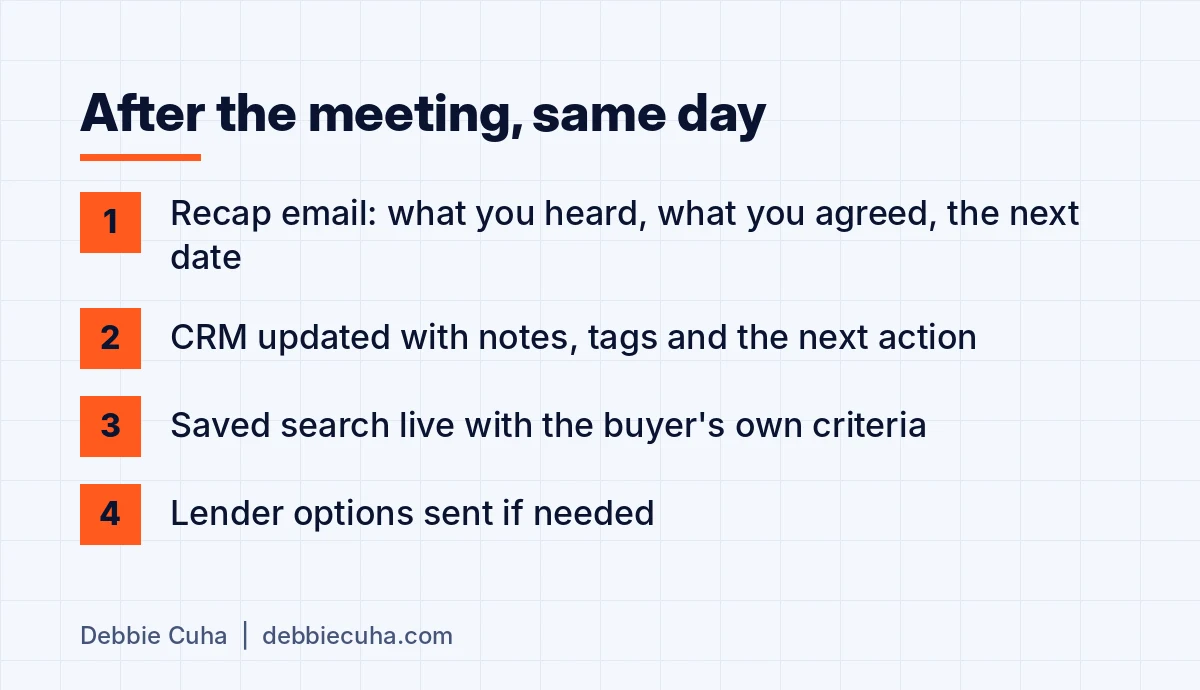
Three things the same day: the recap email, the CRM update and the lender options if they need them. Copy this recap.
Subject: Your home search plan
Hi [Name], thanks for today. Here is what we agreed.
What you are looking for: [criteria]
Budget and financing: [status]
Timeline: [date]
Next step: [first tour date]
Your saved search is live. Reply anytime with questions.
How does a team leader check this is happening?
With two numbers on the scorecard: consultations held and agreements signed. If an agent shows 10 buyers and has two consultations logged, you have found the problem without sitting in a single car.
Once a quarter, look at the ratio between the two. Many consultations and few agreements points at part 3.
What mistakes ruin a buyer consultation?
Five, and each one has a line in the SOP that prevents it.
- Touring before the consultation and the signed agreement
- A vague or nervous explanation of compensation
- Recommending only one lender
- No saved search, so the buyer finds homes on their own first
- Steering language of any kind
New agents should run this from day one. It is part of the first 90 days plan, and it is SOP 4 of the twelve in my guide to real estate SOPs.
Next steps
- Get the free 12-SOP kit and put your name on the first five.
- See how SOP consulting works if you want these built for your team.
- Or email me a question at dc@syngp.com. I read every one.