Match Rewards to Effort: What Month-End and Cabo Taught Me About Culture
By Debbie Cuha, November 5, 2026. 6 min read
People follow a hard system when the reward for following it is clear, earned and paid on time. If the person who does everything right and the person who coasts are treated the same, you have told the whole team that the standard is optional. Culture comes out of that math more than out of anything you say in a meeting.
Key takeaways
- People run a hard system when the reward is clear, earned and paid on time.
- Treating the coaster and the performer the same tells the team the standard is optional.
- Reward activity standards, not only closings.
- Pay rewards within a week and in public.
- Do not hand out consolation prizes.
What did that look like at DirectLender?
Month-end at DirectLender.com was a war. Seventeen-hour days. We were doing more than 1,000 loans a month across 280 offices.
Then, the first week of every month, the winners were flown to Cabo.
Not everyone. The winners. The hard week and the reward were part of the same system, and the reward arrived days after the effort, not at an annual banquet. What I kept after the 2008 crash took nearly all of it is in rebuilding after losing everything.
What makes a reward work?
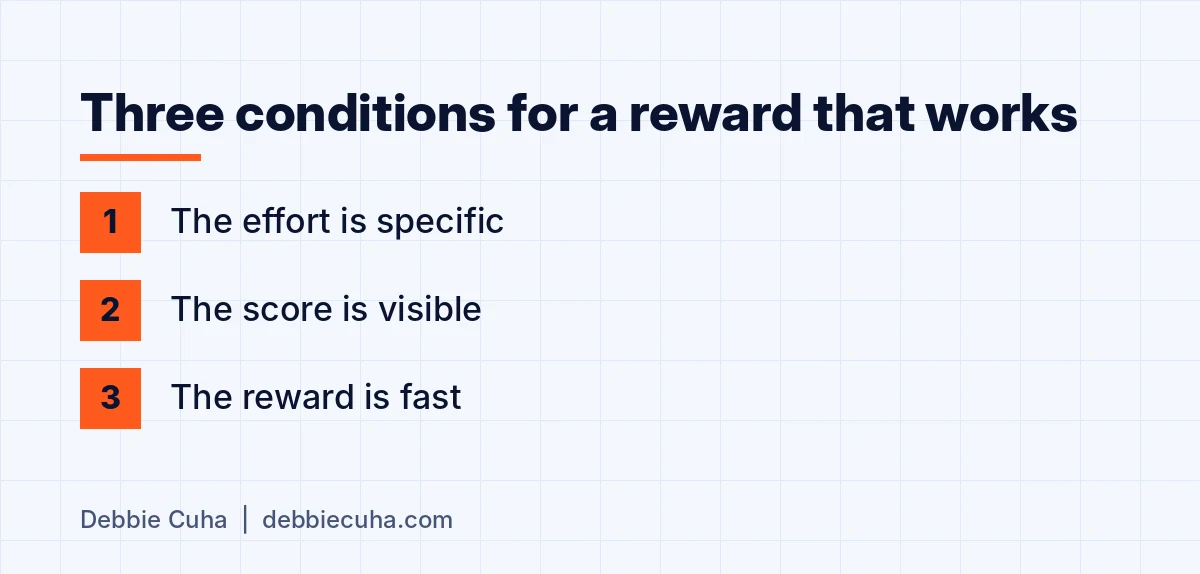
Three conditions: the effort is specific, the score is visible and the reward is fast. Take away any one and the trip is just an expense.
| Missing | What the team hears | What you get |
|---|---|---|
| A specific effort | "Work hard and we will see" | Arguments about who deserved it |
| A visible score | "The boss decides" | Suspicion, and favorites |
| A fast reward | "Maybe at the end of the year" | Effort that fades by the second month |
Should you reward activity or results?
Both, with activity first. Closings pay their own reward in commission. The reward plan is for the work that produces closings: conversations, appointments held, updates sent on time.
REALTOR Magazine's piece on healthy rivalry at a brokerage (May 22, 2017) makes the same observation from the other side: contests built only on production tend to go to the same top performers and can discourage newer agents. An activity standard gives the agent in month three a line she can cross.
Count only what a second person can verify in the CRM. An activity nobody can check is an invitation to inflate it.
How do you design it for a small team?
You do not need a plane. You need four steps.
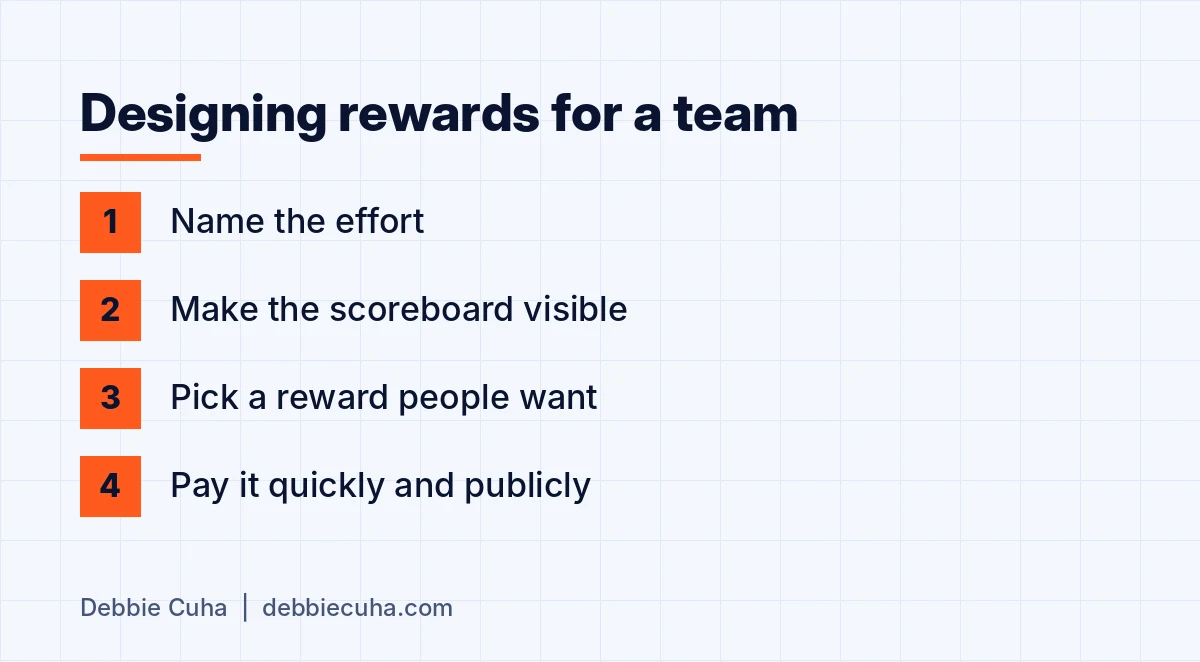
- Name the effort. One or two activity standards, such as conversations and appointments held. See the agent scorecard.
- Make the scoreboard visible. On the wall or in the team chat, updated weekly in the weekly numbers meeting.
- Pick a reward people actually want. Ask them.
- Pay it quickly and publicly. Within a week of the period ending.
Should the reward go to one winner or to everyone who hits the line?
To everyone who crosses a line you set in advance.
A ranking has one winner, and once the leader pulls ahead the rest of the team has nothing left to play for. A line means every person controls whether they earn it, and nobody has to lose for someone else to win.
What rewards do people actually want?
Ask them, because you will guess wrong. Offer a short list and let the team rank it before the period starts.
| Reward | Costs you | Works when |
|---|---|---|
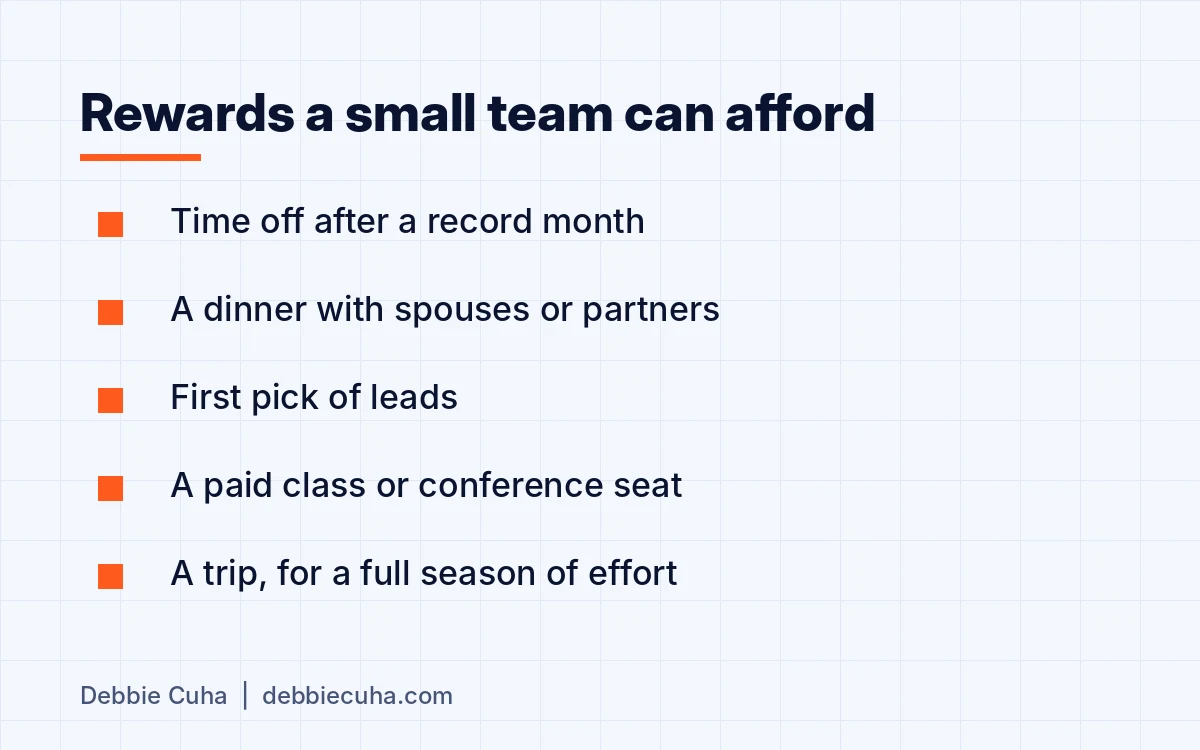
| Time off after a record month | A day of coverage | The team is tired |
| A dinner with spouses or partners | One evening and the bill | Families have carried the long weeks too |
| First pick of leads or a better lead tier | Nothing in cash | Leads are the scarce thing |
| A paid class or conference seat | The fee | The agent is building a skill |
| A trip | The most | The effort was a full season, not a week |
How fast should you pay?
Within a week of the period ending, and in front of the team. Announce the date when you announce the plan. A reward that shows up three months later rewards patience, and the effort it was meant to mark is forgotten.
What goes on a one-page reward plan?
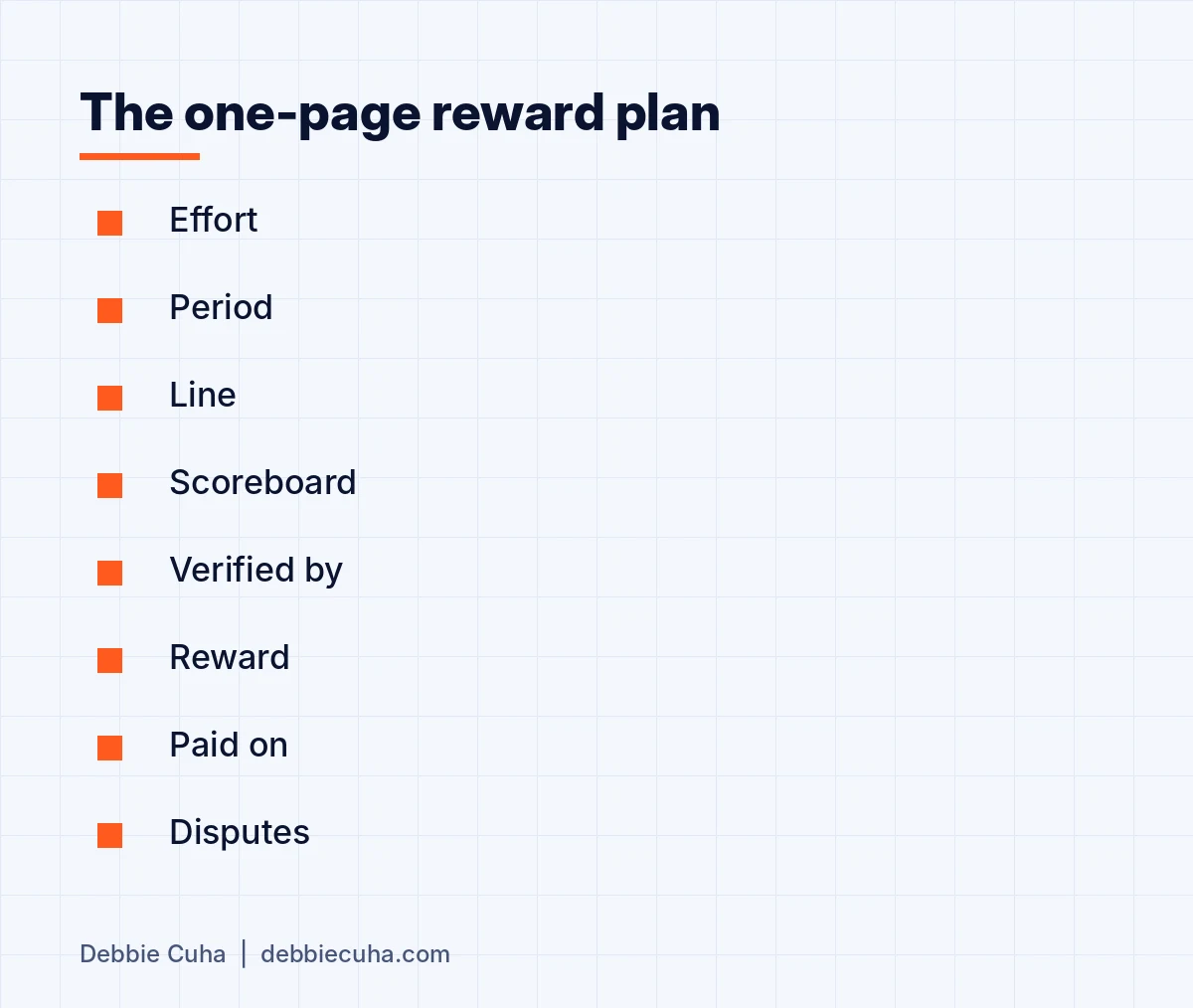
Eight lines, written before the period starts. If you cannot fill in a line, you are not ready to announce it.
| Line | What you write |
|---|---|
| Effort | The one or two activities that count, and how each is defined |
| Period | Start date and end date |
| Line | The number that earns the reward |
| Scoreboard | Where the numbers are posted and how often |
| Verified by | Who checks the count, and in which system |
| Reward | What it is |
| Paid on | The date, within a week of the end |
| Disputes | Who decides, and by when |
Tom Ferry's site puts arbitrary bonus structures on its list of team-building pitfalls (March 3, 2022) and calls for bonus systems that are transparent and fair. A written page is how you get there.
Before you announce anything, ask your accountant how the reward is taxed for the person who receives it, and ask your broker whether it fits your agreements.
What about the people who do not win?
They need two things: a clear line that shows how close they were, and a leader who sits down with them that week. That is what the one-on-one is for.
What they do not need is a consolation prize. The moment everyone gets the trip, the trip means nothing, and your best people notice first.
Does this make a culture cutthroat?
Only if the standard is hidden or the scoring is unfair. When the rules are written, the numbers are public and anyone can earn it, competition turns into pride.
How much should you spend?
Decide the budget before the period, not after a good month. Tie it to the extra production the effort should create, and choose a reward you can repeat. A reward you run once and cancel teaches the team not to believe the next one.
How do you know it is working?
Watch the middle of the scoreboard, not the top. Your strongest people would likely have performed without it. If the activity numbers for the middle of the team rise during the period, the plan is working.
I have said it before in why teams ignore their SOPs: rewards that do not match effort are the reason nobody talks about. Fix that, and a lot of "culture problems" go away on their own. The rest of the system is in my guide to real estate SOPs.
If you show up committed, I will go through every wall with you. And I will make sure the system notices.
Next steps
- Get the free 12-SOP kit and put your name on the first five.
- See how SOP consulting works if you want these built for your team.
- Or email me a question at dc@syngp.com. I read every one.